Natural product page

Prunes

Conventional prune programs for everyday retail, breakfast, bakery, foodservice and ingredient manufacturing, with whole and pitted supply options.

Origin: Selected sourcing programs
Supply mode: Whole or pitted, industrial and consumer packs
Commercial role: Flexible category line for retail, repacking and ingredient use
Whole Pitted Consumer packs Industrial Private label
Prunes for retail and industrial supply

Commercial overview

Conventional prune programs are relevant across both consumer and industrial channels because they combine familiar market demand with broad application flexibility. The product can be positioned for direct dried fruit consumption, breakfast assortments, bakery formulas, foodservice use and ingredient-led manufacturing depending on grade, format and final packing structure.

Commercially, prunes are useful because they can serve more than one buyer profile at the same time. Importers may use them as a stable everyday retail line, distributors may place them into foodservice and wholesale channels, while industrial users may prefer pitted formats for easier processing and better workflow efficiency.

This page is structured to help importers, distributors, repackers, private label buyers and industrial users review the line before moving into detailed quote discussions around specification, pitting status, pack style, shipment size, compliance expectations and destination market requirements.

Specification snapshot

Natural prunes, washed, sorted and packed, available in whole or pitted formats. No additive profile programs may be discussed on request depending on the supply route and intended application.

Commercial discussions generally cover moisture and texture profile, size or count logic where relevant, pitting status, microbiological expectations, foreign matter control, visual quality, packing format and any customer-specific labeling or destination compliance requirements.

Final values may be aligned to crop conditions, grade, processing route, application, agreed inspection criteria and destination market requirements.

Range position

Natural / Conventional Range

Conventional prune programs for everyday retail, breakfast, bakery and ingredient manufacturing with flexible whole and pitted formats.

Key applications

  • Retail dried fruit use
  • Breakfast ranges
  • Bakery applications
  • Foodservice supply
  • Ingredient manufacturing
  • Private label packs

Packing direction

  • Whole prune packs
  • Pitted programs
  • Consumer packs
  • Industrial formats
  • Bulk shipment cartons
  • Retail-ready formats

Why prunes remain commercially useful

Prunes are commercially valuable because they sit between everyday dried fruit demand and practical ingredient functionality. They fit classic consumer usage, but they also serve processors, repackers and food manufacturers that need a fruit ingredient with recognizable identity, stable sweetness and flexible format options.

  • Useful for both direct-consumption and processing channels
  • Suitable for whole fruit retail and pitted industrial applications
  • Relevant to breakfast, bakery and general dried fruit categories
  • Easy to position in consumer packs, foodservice packs and bulk formats
  • Can support private label and repacking programs without excessive complexity
  • Works as a complementary line within a broader dried fruit portfolio

Typical buyer profiles

  • Importers: looking for a steady prune line for retail and wholesale channels
  • Distributors: serving supermarkets, specialty stores, foodservice and independent trade
  • Repackers: requiring consistent incoming product for secondary packing
  • Private label buyers: needing controlled format, labeling and shelf-ready presentation
  • Industrial users: evaluating pitted prunes for easier downstream use
  • Foodservice suppliers: needing practical formats for kitchens, caterers and bakery customers

Technical product profile

Product character

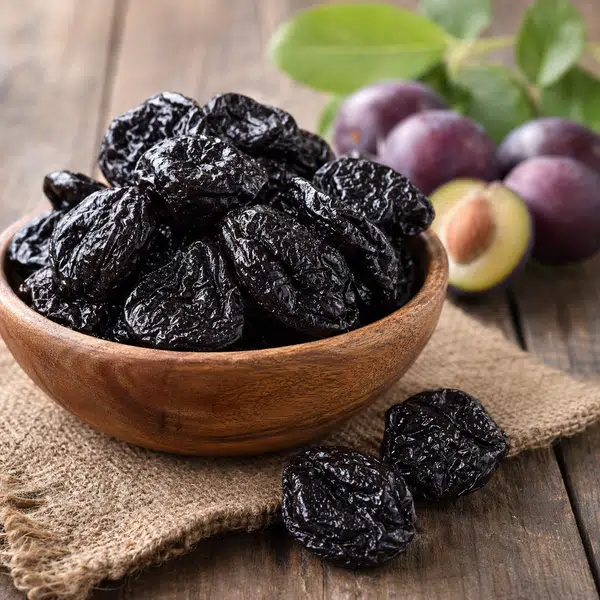
Prunes are dried plums with a naturally rich taste, soft texture profile and broad commercial relevance. They are suitable for both consumer-facing dried fruit sales and ingredient use where fruit identity, sweetness and handling practicality matter.

Format flexibility

Whole prunes are typically relevant for traditional retail and breakfast use, while pitted prunes are often more convenient for industrial handling, repacking and food preparation where pit removal must already be completed before downstream processing.

Processing direction

Supply discussions usually include washing, sorting, grading, pitting where applicable and packing. Additional focus may be placed on size consistency, visual presentation, defect control and pack suitability for the intended market channel.

Commercially relevant quality parameters

In practice, buyers do not evaluate prunes only by naming the product. The commercial value depends on how well the specification fits the intended use. The important parameters are the ones that influence appearance, processing suitability, handling efficiency, complaint risk and shelf presentation.

  • Whole or pitted presentation
  • Moisture and texture profile
  • Size range or count logic where relevant
  • Color uniformity and overall appearance
  • Defect tolerance including damaged or excessively dry fruit
  • Foreign matter control and cleanliness
  • Microbiological expectations according to channel and market
  • Residue or contaminant expectations where required
  • Pit removal quality for pitted formats
  • Packing integrity and shelf-life alignment

Typical specification discussion points

  • Whole or pitted requirement
  • Retail, breakfast, bakery, foodservice or ingredient end use
  • Target grade and visual quality expectations
  • Required microbiological and compliance limits
  • Pack style, net weight and secondary carton format
  • Private label requirements and label copy scope
  • Document package for customs and customer approval
  • Shipment size and loading model
  • Shelf-life requirements and storage expectations
  • Any market-specific restrictions or customer-specific controls

Indicative technical specification framework

The points below are an operational guide for inquiry-stage discussion. Final commercial terms should always be confirmed in the approved product specification and contract documentation.

Product name: Conventional prunes

Raw material: Dried plums

Origin: Selected sourcing programs

Presentation: Whole or pitted

Processing status: Washed, sorted and packed

Additive profile: No additive profile programs may be discussed on request depending on the supply route

Appearance: Characteristic for agreed prune grade and format

Taste and odor: Characteristic, free from abnormal odor or obvious fermentation

Foreign matter: Controlled according to agreed specification

Microbiology: Confirmed according to customer, market and application requirements

Shelf life: To be confirmed according to pack type, storage conditions and production timing

Storage: Cool, dry and hygienic storage away from heat, moisture and odor contamination

Exact analytical, microbiological, residue and defect tolerance values should be confirmed case by case and not assumed from a general page summary.

Whole prunes

Suitable for classic retail lines, breakfast packs and customers that prefer traditional dried fruit presentation.

Pitted prunes

More practical for industrial processing, repacking and food preparation where ready-to-use fruit saves handling time.

Retail and industrial fit

The same product category can support consumer packs, foodservice formats and bulk ingredient programs depending on pack structure and agreed grade.

Application-specific buying logic

The correct prune program depends on the channel. A retailer may focus on visual appeal, pack design and consumer convenience, while an ingredient buyer may care more about pitting status, usability, texture behavior and specification clarity.

  • Retail: appearance, pack presentation and shelf-ready consistency
  • Breakfast ranges: consumer familiarity, soft eating quality and practical portion formats
  • Bakery: manageable fruit handling and application suitability
  • Foodservice: format convenience and dependable carton supply
  • Ingredient manufacturing: pitted availability, consistency and processing practicality
  • Repacking: clean incoming product and stable lot-to-lot performance

Packing and private label options

Packing discussions usually start with the target sales channel. Bulk and industrial formats are common for importers, distributors and processors, while smaller consumer-oriented formats are more relevant for retail and private label programs.

  • Bulk cartons for wholesale and industrial buyers
  • Foodservice-oriented pack formats
  • Retail pouches, trays or cartons depending on the program
  • Private label options subject to agreed artwork and legal text
  • Whole and pitted format selection according to intended use
  • Pallet, carton and loading configuration aligned to transport needs

Final pack dimensions, film or tray type, carton structure, palletization and label scope should be defined during quotation and approval.

Shipment and supply planning

Prune programs are often discussed in terms of both product and logistics. Buyers may procure them as a standalone line or as part of a wider dried fruit sourcing plan. In both cases, shipment timing, carton efficiency, loading structure and document readiness affect the final commercial outcome.

  • Suitable for structured import and replenishment programs
  • Relevant for full-container or broader portfolio planning depending on the program
  • Can support both bulk and retail-ready shipment structures
  • Requires early alignment on documents, labels and destination expectations
  • Benefits from clear confirmation of pallet count, gross weight and loading plan before dispatch

Quality assurance and compliance discussion

Serious buyers typically evaluate prunes on more than price. They need confidence that the agreed product can pass incoming checks, match the intended use and arrive with the correct document package. For that reason, technical and commercial discussions usually move together.

  • Lot-based traceability and product identification
  • Alignment on agreed specification before dispatch
  • Document readiness according to customer and market needs
  • Microbiological and analytical review where required
  • Private label copy and packaging review where applicable
  • Clear inspection logic to reduce dispute risk after arrival

Commercial risks to clarify early

  • Not defining whole versus pitted format clearly enough at inquiry stage
  • Using a retail-style expectation for a supply intended mainly for ingredient use
  • Leaving microbiological or compliance requirements until after price negotiation
  • Not confirming acceptable texture and moisture profile for the actual application
  • Starting private label work before legal text and artwork responsibilities are clear
  • Assuming all prune programs are interchangeable regardless of source, grade or process route

What buyers usually want from a supplier discussion

Most effective inquiries give enough information to match the right prune format to the actual business need. That keeps the quotation focused and reduces unnecessary back-and-forth during the sampling or approval process.

  • Clear recommendation on whole or pitted format
  • Packing options that match the sales channel
  • Technical alignment on quality, microbiology and compliance points
  • Shipment logic that fits the buyer's replenishment cycle
  • Document and label requirements agreed in advance
  • A commercially practical structure for repeat purchasing

How Atlas usually discusses this product

Commercial discussions usually begin with the format requirement, because whole and pitted prunes serve different operational needs. The next step is usually to define the target market, end use and expected pack direction. A retail buyer may focus on presentation, labeling and consumer convenience, while an industrial user will typically focus on pitting status, consistency, handling practicality and technical compliance.

From there, the conversation normally moves into grade logic, microbiological and residue expectations, packing format, labeling scope, shipment size and whether the supply will be used for bulk import, foodservice distribution, industrial processing or private label retail. This keeps the quotation commercially useful rather than generic.

Whole Pitted Consumer packs Industrial Breakfast & bakery

What to include in your inquiry

  • Whole or pitted requirement
  • Retail, foodservice, breakfast, bakery or ingredient end use
  • Target market and destination country
  • Estimated shipment size or annual volume
  • Required pack format and carton style
  • Any microbiological, analytical or compliance expectations
  • Private label or plain pack requirement
  • Requested documents and approval standards
  • Preferred shipment window

Best fit for this product

Prunes are best suited for buyers that want a commercially established dried fruit line with flexibility across both consumer and industrial channels. They are especially relevant where one product needs to cover everyday retail demand while also remaining practical for repacking, foodservice or ingredient use.

For many professional buyers, prunes are not only a standalone item. They are part of a broader dried fruit range that benefits from clear format selection, controlled quality alignment and practical pack planning.

Quick Contact