For importers
Useful for buyers assessing origin strength, export suitability, documentation readiness and program structure.
This FAQ page is designed for importers, distributors, private label teams, foodservice buyers and industrial users that want quick but meaningful answers on sourcing dried fruits from Turkey. It covers origin, product range, quality topics, packing formats, certification, documentation, shipment planning and how to start a commercially useful inquiry.
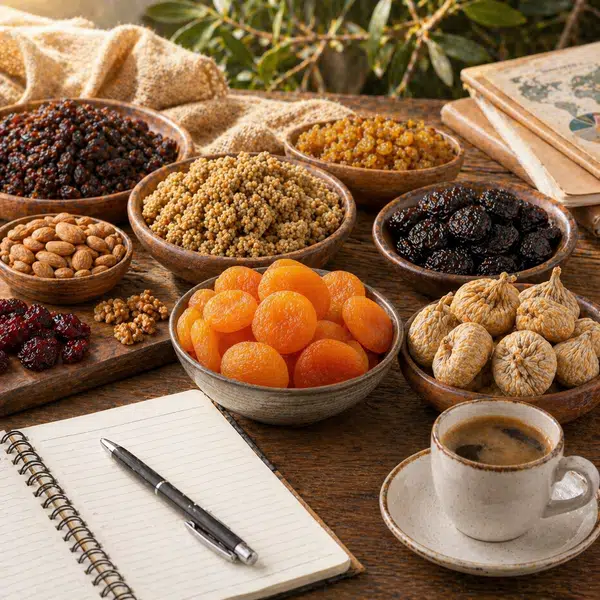
These answers are written to support real B2B buying discussions. Instead of generic consumer-style FAQs, the page focuses on the topics that usually matter in dried fruit trade: origin logic, organic versus conventional supply, quality parameters, product applications, packing routes, documents, logistics and the practical steps needed to move from inquiry to quotation.
Useful for buyers assessing origin strength, export suitability, documentation readiness and program structure.
Relevant for teams reviewing retail pack concepts, private label feasibility, product story and specification discipline.
Helpful for ingredient buyers evaluating application fit, technical expectations, format suitability and repeat supply potential.
Buyers usually ask the same core questions before deeper negotiations begin. The sections below address the most common areas of interest so that the first supplier conversation can move faster and stay more relevant.
What is supplied, from where, and how origin affects category strength.
How technical expectations are discussed across different dried fruit lines.
Bulk, industrial, foodservice and private label formats plus shipment planning.
Inquiry structure, documents, pricing context and how programs are built.
The answers below are concise but commercially relevant. They are meant to provide enough depth to guide a professional sourcing discussion without overloading the page with unnecessary detail.
Apricots, apricot kernels and mulberry-linked programs are centered around Malatya, one of the best-known production areas for dried apricot-related supply. Figs and many raisin programs are associated with Aydın and the broader Aegean supply base. This regional focus helps buyers connect each product with the origin that is most commercially and technically relevant for that category.
No. Atlas is positioned for both certified organic and conventional or natural supply, depending on product, destination market, buyer preference and application. Some customers prioritize organic certification and clean-label positioning, while others prioritize industrial suitability, wider price accessibility or conventional mainstream retail requirements.
Core categories include organic and conventional sun-dried apricots, dried figs, dried mulberries, apricot kernels, prunes, sultana raisins, black raisins, dried sour cherries and selected date programs. Depending on the inquiry, Atlas can also support mixed-product discussions for buyers who want to build a broader dried fruit basket through one supply conversation.
Yes. Supply can be discussed across bulk export cartons, industrial packs, foodservice-oriented formats and selected private label retail-ready programs. The most suitable route depends on product type, annual volume, market requirements, label complexity, pack format and whether the buyer wants direct retail presentation or downstream repacking flexibility.
Yes. Many dried fruit categories can be aligned to industrial or ingredient use, especially for bakery, snack, cereal, confectionery and food manufacturing channels. In these cases, the discussion usually focuses more on format, cut style, moisture behavior, uniformity, microbiological suitability, packing efficiency and repeatability rather than only retail appearance.
Atlas is positioned mainly for importers, distributors, wholesalers, premium retail brands, private label buyers, industrial processors, ingredient users and foodservice-oriented customers. The site and inquiry structure are built for B2B buyers rather than direct-to-consumer retail transactions.
Specifications are usually discussed product by product and application by application. Buyers may review points such as grade, size, moisture, texture, appearance, microbiological profile, mycotoxin sensitivity, additive status, sulfur status where relevant, packing format and destination-market-specific requirements. Atlas aims to keep this discussion practical and commercially aligned rather than overly generic.
Final specifications depend on the actual product, crop, processing route and market requirement, but yes, product specification sheets can typically be coordinated as part of serious supply discussions. These are especially relevant for import approval, technical review, industrial qualification and private label onboarding.
Yes. The same fruit category may be positioned differently depending on whether it is intended for snacking, ingredient blending, baking, foodservice or retail sale. That affects the discussion around grade, cut or whole format, pack size, moisture profile, visual presentation and overall commercial route.
Yes. For organic programs, buyers usually want clarity on certification alignment, operator traceability, document support and how the organic position fits the destination market. These discussions are handled as part of the broader technical and commercial review of the project.
Yes. Not every customer is looking for certified organic supply. Some buyers prioritize natural presentation, clean-label positioning or conventional formats that match their price and market structure. Atlas can support discussions across both sides depending on the category and program logic.
Pack formats may include bulk export cartons, industrial handling formats, foodservice packs and selected consumer retail formats for private label or branded programs. The correct format depends on container economics, downstream use, shelf presentation, label structure, market norms and minimum commercially workable volumes.
Yes, where the product, order volume, market route and packaging scope justify it. Private label projects generally require a more detailed discussion around MOQ, artwork readiness, packaging material, product style, barcode and label rules, language requirements, shipping structure and launch timing.
Depending on the product and order, Atlas can coordinate documents such as commercial invoice, packing list, certificate of origin, product specification sheet, analysis report and other shipment-related paperwork required by the destination market. Exact documentation depends on the market, product and shipment structure.
Atlas can support the commercial side of the compliance conversation by identifying the documentation and product information typically needed in a serious export program. Final regulatory responsibility always depends on the destination country, the importer’s legal framework and the exact product being shipped.
Yes. Some buyers prefer to manage apricots, figs, raisins, mulberries and other lines through one coordinated supplier discussion instead of sourcing each line independently. This can improve communication efficiency, simplify portfolio planning and make it easier to align shipment and documentation workflows where commercially suitable.
Both can be discussed. Some customers begin with a trial or spot order, while others want to build an annual or seasonal program with repeat shipments, forecast planning and clearer long-term volume expectations. Annual program discussions are usually more effective when the buyer can share expected monthly, quarterly or seasonal demand patterns.
Annual programs are typically built around product selection, forecasted volume, expected purchase frequency, crop timing, pack format, lead-time expectations and the commercial balance between fixed needs and flexible replenishment. The earlier these points are shared, the more realistic the commercial discussion becomes.
Pricing is usually influenced by crop size and quality, grade, size selection, product type, organic versus conventional status, processing yield, pack format, shipment timing, freight cost and the overall market balance between supply and demand. For some categories, premium appearance or private label complexity can also materially change the commercial structure.
A very basic indication may be possible in some cases, but a useful quotation normally requires at least the product, destination country, target volume, pack format, organic or conventional requirement and any major technical points. Without that context, price discussions risk being too generic to support a real decision.
The most useful inquiry includes product name, organic or conventional requirement, destination market, expected volume, pack style, intended application, any critical quality parameters and target timeline. This helps reduce unnecessary back-and-forth and makes it easier to respond with a commercially relevant proposal.
Sample discussions can be part of a serious project, especially for technical approval, retail fit, industrial trials or private label review. Whether and how this proceeds depends on the product, stage of the project and commercial seriousness of the inquiry.
Yes. Shipment structure matters in dried fruit trade because packing style, palletization, loading efficiency, transit protection and storage behavior all affect total delivered performance. Buyers often discuss these points alongside pack format and order volume, especially for repeat business or longer transit routes.
The core strength of Atlas is clearly Turkey-led, especially for categories such as apricots, figs, mulberries and raisins. At the same time, selected complementary categories can also be discussed where they support a broader dried fruit portfolio and make commercial sense for the buyer.
Turkey is a strategic origin because certain categories are strongly associated with specific Turkish regions, and because the country has long-standing agricultural, processing and export depth across several dried fruit groups. This makes Turkey especially relevant for buyers who value origin recognition, category experience and export familiarity.
If the project is still at an early stage, the best approach is to explain the target market, expected use, preferred positioning and approximate volume. That makes it easier to suggest whether the best route is organic, conventional, bulk, private label, premium retail or industrial-focused.
The fastest route is through the contact form. Share product, destination country, estimated volume, preferred packing format and any critical requirements such as organic status, certification expectations or industrial use. That gives enough structure for a meaningful commercial response.
Many delays in dried fruit sourcing happen because the first inquiry is too broad. A better brief usually leads to faster product matching, a more relevant commercial response and fewer follow-up questions before quotation or sampling.
A clear inquiry helps align product suitability, technical expectations, documentation needs and commercial structure early in the discussion. That saves time and improves the accuracy of any quotation, product suggestion or supply recommendation.
If you need more depth on applications, grades, certifications, private label strategy, seasonality or pricing logic, the knowledge center can help before you send an inquiry. It is structured around the same commercial and technical topics that usually shape dried fruit purchasing decisions.
Review bakery, confectionery, snack, breakfast and ingredient usage topics by fruit category.
Explore seasonality, annual program building, bulk export strategy and commercial risk factors.
Learn how grades, sizes, specifications, documentation and storage topics affect real buyer decisions.