Fruit-filled pastries
Dates are relevant in pastries and laminated products where manufacturers need a dense fruit filling with natural sweetness and stable handling performance.
A practical industrial and commercial guide to Tunisian dates in bakery, including fillings, dough inclusions, date paste systems, bars, cookies, pastries, cakes and fruit-based bakery programs.
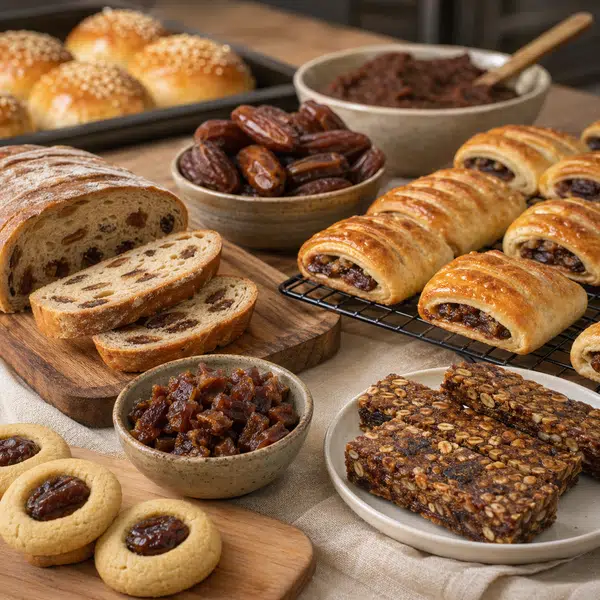
Bakery manufacturers do not buy dates only as a dried fruit. They buy softness, sweetness, filling behavior, dough compatibility and a functional fruit base that can work across multiple bakery systems.
Tunisian dates, especially Deglet Nour, are highly relevant in bakery because they provide natural sweetness, dense fruit character, soft texture and broad format flexibility. They can be used in filled pastries, energy and cereal bars, fruit breads, cookies, muffins, cakes, bakery snacks and other products where manufacturers want a recognizable fruit ingredient with a premium and naturally sweet profile. In many bakery systems, dates can contribute both flavor value and structural functionality.
From an industrial perspective, however, bakery use is highly application-dependent. A manufacturer producing fruit centers for pastries may require a date paste or processed fruit base with stable deposit behavior and good bake tolerance. A snack bar producer may prefer chopped or paste-oriented dates that contribute binding and softness. A cookie or cake producer may need smaller pieces with reliable dispersion and acceptable handling during mixing. These are all bakery applications, but they require different supply formats and different commercial discussions.
That is why a generic request for Tunisian dates is rarely enough. Buyers should define whether the dates are intended for fillings, dough inclusions, soft bar systems, bakery toppings or processed fruit preparations. Once the end use is clear, the supplier can structure the quotation around the required format, texture, food safety profile, pack style and shipment rhythm.
Commercially, strong bakery programs are built around repeatability. The date ingredient must not only be available. It must behave consistently across production runs, support the intended texture and remain aligned with the buyer's pack, documentation and annual planning requirements. Atlas therefore frames bakery date sourcing as a technical and commercial program rather than a simple fruit purchase.
Industrial demand usually falls into a small number of practical bakery use cases, each with different process and sourcing expectations.
Dates are relevant in pastries and laminated products where manufacturers need a dense fruit filling with natural sweetness and stable handling performance.
Date-based systems work especially well in soft bakery bars and fruit-grain bars where texture, binding and sweetness can be supported by the fruit itself.
Chopped dates or date-based preparations can add fruit sweetness and texture in premium cookies, filled biscuits and soft-baked products.
Dates can be used as pieces or fruit-based systems in cakes and muffins where they contribute moistness, sweetness and a more indulgent fruit profile.
Pitted, diced or chopped dates can be included in sweet breads and specialty bakery products where visible fruit and soft bite are commercially important.
Dates also fit bakery-snack hybrids and better-for-you bakery concepts where natural ingredient positioning is part of the product strategy.
The correct format depends on whether the manufacturer needs visible fruit, a processed fruit base or a date system that supports dough and filling performance.
Suitable in selected premium bakery products where whole-fruit identity is part of the finished product concept, although they are less common in highly automated lines.
Often preferred when the buyer will further process the fruit in-house or when seed removal needs to be built into the supply stage for safety and efficiency.
Useful for inclusions in dough, bars, cookies and breads where even distribution, manageable piece size and repeatable handling are important.
Highly relevant for fruit centers, bakery fillings, binding systems and products that require a cohesive fruit phase rather than visible separate pieces.
Some industrial buyers need a more application-specific date system prepared for filling or layered bakery use rather than simple whole-fruit supply.
In some cases, industrial users specify their own cut profile, texture expectation or process behavior according to the design of their production line.
In bakery applications, the right date format is judged mainly by how it behaves in the line and how it performs in the finished product over time.
Bakery manufacturers often need a careful balance between softness, chew and structural integrity depending on whether the dates are used as inclusions or fillings.
For dough and batter systems, the date ingredient should move through the process without excessive smearing, clumping or breakdown of the intended format.
When dates are used as paste or in filling systems, deposit control, density, smoothness and texture stability can be more important than whole-fruit appearance.
The selected format should retain acceptable character, moisture balance and commercial usability after exposure to the intended baking conditions.
Tunisian dates are chosen partly for their clean and recognizable sweetness profile, so batch-to-batch sensory consistency matters in branded bakery products.
Industrial bakery buyers generally align microbiological suitability and product safety expectations early, especially where the finished product is ready to eat.
One of the most important industrial roles for Tunisian dates in bakery is as a processed fruit base rather than only as a visible dried fruit inclusion.
Date paste is commercially important in bakery because it can provide sweetness, density, fruit identity and structural contribution in one system. It is used in bars, fruit centers, pastry fillings, layered products and other bakery formats where the manufacturer needs a soft and cohesive fruit phase. In some concepts, date paste also supports binding and texture development while helping create a more natural ingredient story.
For buyers, paste-oriented bakery programs should be discussed separately from inclusion-grade date programs. Once the dates are intended for paste or processed filling use, the priorities shift toward texture consistency, smoothness, process behavior, deposit control and shelf-life compatibility rather than visible fruit appearance alone. This distinction is important because it affects the commercial quotation, the expected technical documentation and the overall supply structure.
Manufacturers should therefore clarify whether they need raw pitted dates for internal processing or a more prepared industrial date base ready for bakery application. The earlier that point is defined, the easier it is to build a program that fits the process economically and technically.
These three bakery categories illustrate why dates need application-specific sourcing rather than a one-size-fits-all fruit approach.
In soft bakery bars, dates are often valued for both sweetness and structural contribution. In these systems, the fruit can support binding and texture, which changes the sourcing discussion from simple fruit inclusion to functional formulation support. In cookies and biscuits, chopped or paste-oriented dates may be preferred depending on whether the target is visible fruit or a softer integrated fruit phase. In filled pastries, the main concern is often the behavior of the fruit system during depositing, baking and final shelf presentation.
Because each route stresses the ingredient differently, the right commercial offer depends on the real process. A date program that works well for fruit bars may not be appropriate for filled pastries. Likewise, a filling-grade date preparation may be commercially excessive for a simpler bread inclusion program. Serious buyers therefore usually define the actual product route before comparing quotations.
Bakery users usually evaluate not only fruit supply but also the cost and stability of turning that fruit into a repeatable finished product.
Buyers usually get better results when they specify whether the dates are for filling, inclusions, bar systems or general bakery fruit use.
Whole, pitted, diced, chopped and paste-oriented date offers should not be benchmarked as if they were commercially identical.
Annual or seasonal bakery volume estimates help suppliers structure steadier programs and improve continuity across recurring shipments.
The right date profile for shelf-ready retail packs may differ from the most efficient format for industrial bakery use, even when both use the same origin.
Carton format, liner quality, pallet logic and handling efficiency matter because bakery factories usually need controlled and repeatable material intake.
Branded bakery products usually require consistent ingredient behavior over time, so the supply program should be designed for repeatability, not just first-order success.
Industrial bakery date programs work best when the packaging supports both safe transport and efficient factory use after arrival.
Common for industrial bakery users that need hygienic, stackable and warehouse-efficient supply in recurring programs.
Whole fruit, chopped fruit and paste-oriented systems may each require different handling expectations depending on fragility, density or process route.
Standardized pallet structure and carton identification help with receiving, rotation and traceability in bakery manufacturing environments.
For bakery manufacturers, packaging is not merely a freight detail. It affects unloading, internal transfer, storage and production feeding. When the business depends on multiple repeat shipments across the year, stable packaging discipline can reduce operational friction and support better overall program efficiency at destination.
Industrial bakery buyers usually require a more formal approval structure than general fruit traders because the date ingredient becomes part of a controlled manufacturing process.
The brief should define format, pitted requirement if relevant, target texture, intended bakery use, pack structure and any critical appearance or handling expectations.
Because most bakery products are ready to eat, microbiological suitability and product safety expectations should be aligned before recurring purchasing begins.
Reliable lot identification supports internal QA systems, complaint handling and formal customer approval routines in modern bakery supply chains.
Organic and other customer-required documentation should be clarified early where the bakery line depends on those commercial claims.
Dates are often chosen in bakery because they combine sweetness, soft fruit texture and strong product storytelling in one ingredient family.
Dates support bakery concepts built around fruit-led sweetness and ingredient recognition.
They add density, chew and moist fruit character in bars, fillings, cakes, pastries and other premium bakery applications.
The same origin can support whole, cut and paste-based bakery systems when the sourcing program is matched correctly to the process.
Tunisian dates provide a recognizable and premium fruit origin story that can strengthen bakery product positioning in the right markets.
Most sourcing problems in bakery date programs can be reduced by defining the real process need before the quotation stage.
Whole, chopped and paste-based date formats can behave very differently in dough, filling and bar systems, so the wrong choice may reduce process efficiency.
If the supplier does not know whether the dates are intended for filling, bars or inclusions, the quoted product may not fit the real bakery need.
A lower nominal offer may not deliver the same process performance, yield or finished bakery value as a better-matched industrial format.
Changing carton, liner or handling expectations too late can weaken shipment planning and reduce efficiency in recurring supply programs.
Without demand visibility, suppliers have less ability to build a stable annual program around the buyer's actual production calendar.
If the approval process is too general, the product may later underperform in mixing, depositing, bake tolerance or finished texture.
A strong bakery inquiry should make the industrial role of the date ingredient clear from the first conversation.
Confirm whether the requirement is for whole dates, pitted dates, chopped dates, date paste or another bakery-specific fruit format.
Share the intended bakery use, target texture, process route, handling expectations, food safety requirements and any critical line concerns.
Clarify expected volume, pack format, target market, certification scope and whether the project is a trial, recurring order or annual supply program.
These are the points that usually matter most for industrial buyers using Tunisian dates in bakery systems.
Tunisian dates should be sourced according to whether they are needed for fillings, bars, inclusions or bakery fruit systems, not as a generic fruit line.
Whole, chopped and paste-based date formats behave very differently in dough, filling and baked applications and should not be treated as interchangeable.
The right date format supports consistency in processing, texture and finished product quality across multiple bakery productions.
Forecast visibility and stable specifications generally support better supply continuity than reactive spot buying for bakery manufacturing.
Short answers for importers, bakery manufacturers and product developers.
Buyers should clarify end use, target market, required format, whole or pitted requirement, desired grade, certification profile and preferred pack format before requesting a quotation.
Because bakery applications require different date formats, texture behavior, filling performance, bake tolerance and commercial conditions than retail whole-fruit, breakfast mix or confectionery programs.
Whole dates, pitted dates, chopped dates, diced dates, date paste and filling-oriented date preparations are the most relevant formats depending on whether the product is a pastry, bar, cookie, cake, bread or fruit-filled bakery item.
In many cases yes, provided the fruit profile, certification requirement, process route and packing structure are aligned with the customer requirement and the available sourcing program.