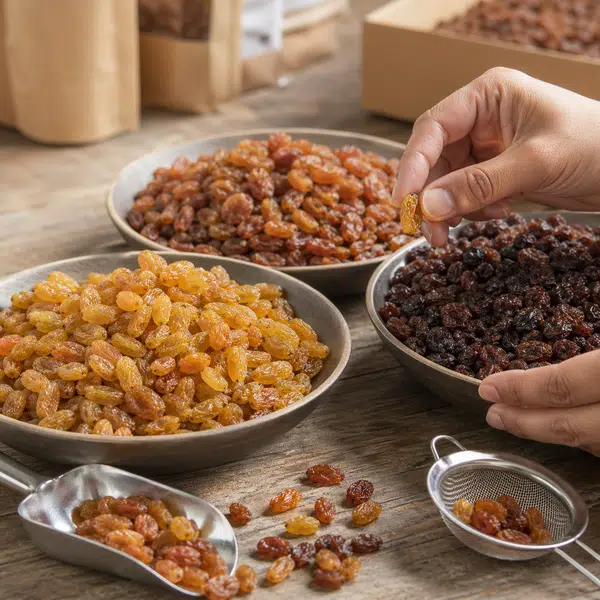
Sultana raisins are one of the most commercially flexible dried fruit categories in international trade. They are used in bakery, cereal, confectionery, snacking, foodservice, repacking and private label retail programs. Because the same product family serves many channels, the commercial meaning of grade, size and quality can change significantly from one buyer to another. A bakery manufacturer may place more importance on processing consistency and moisture management, while a retail buyer may focus first on visible cleanliness, appearance and shelf presentation.
For that reason, buyers should avoid treating sultana raisins as a simple commodity defined only by origin and price. A lower quotation may refer to a different size profile, a wider tolerance range, a less selective sorting level or a bulk-oriented commercial grade not suitable for direct retail. In contrast, a tighter grade with stronger visual consistency and better pack presentation can support higher-value channels but may not be necessary for industrial use. Understanding these distinctions early helps prevent mismatched offers, unrealistic comparisons and avoidable disputes after shipment.
When discussing grades, sizes and quality parameters, the first question is always end use. Once the application is clear, the buyer can align the required fruit profile with the correct commercial offer. This includes the size distribution, expected color range, stem tolerance, moisture behavior, foreign material control, packing format and whether the fruit is intended for direct consumption or further processing. Clear alignment at this stage makes pricing more meaningful and sourcing more efficient.
Atlas prepares topic-specific guides like this so importers, processors, wholesalers and brand owners can understand the technical-commercial structure behind each product, not just the headline product name. In dried fruits, that distinction matters because the right product is usually the one that matches the application and the risk profile of the program, not simply the one with the cheapest unit value.