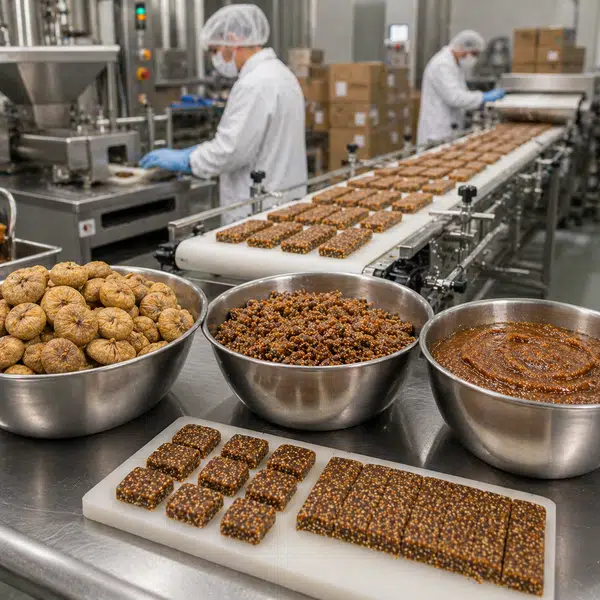
Turkish dried figs are strongly associated with Aydin and with a range of commercial formats including Lerida, Garland, Protoben, diced figs and fig paste. In confectionery, however, the important question is not only origin or format name. The real question is how the chosen fig format behaves in the intended application. A fruit used in fruit bars, enrobed pieces, molded centers, soft fillings or sugar confectionery systems must match the technical process and the commercial objective at the same time.
Dried figs are relevant to confectionery because they offer natural sweetness, distinctive fruit character, fiber-rich positioning and a premium Mediterranean ingredient story. They can support fruit-and-nut bars, chocolate-coated fruit products, paste-filled confectionery, layered snacks, cut-and-wrap fruit pieces, soft chew systems and selected premium gift or specialty products. That makes them attractive not only from a formulation perspective but also from a branding and value-perception perspective.
Still, confectionery users cannot buy dried figs as a generic commodity. They need to define whether the requirement is for visible fig pieces, process-ready diced material, paste for fruit centers, or a specific cut profile for inclusion or layering. They also need to consider sweetness profile, texture, process tolerance, cut consistency, microbiological suitability, packing method and annual supply continuity. These points influence both functionality and final commercial competitiveness.
For that reason, application-specific guidance is useful. It helps confectionery buyers compare formats, process behavior, packing routes and sourcing logic before moving into a quote, sample review or annual program discussion.