Apricot Kernels

Apricot Kernels: Grades, Sizes and Quality Parameters

A practical buyer and exporter guide covering apricot kernel grades, kernel types, size logic, defect tolerances and the quality parameters that matter in real commercial programs.

Specification focusGrades and sizes
Trade focusFit-for-use quality
Buyer focusIndustrial and retail needs
Apricot Kernels: Grades, Sizes and Quality Parameters

Why this topic matters

Apricot kernels are not bought intelligently through price alone. In practice, the real commercial question is which grade and quality profile matches the intended use.

Apricot kernels can sit in several value chains at once, from premium retail and private label to industrial bakery, confectionery, snack mixes and ingredient processing. Because of that, buyers usually need a much clearer conversation than simply asking for a price per kilogram. They need to define the kernel type, end use, target market, acceptable appearance, size style, pack format and shipment rhythm before the right commercial offer can be structured properly.

When discussing grades, sizes and quality parameters, the first question is application fit. A retail buyer may care strongly about whole-kernel appearance, visual uniformity and consumer-facing presentation. An industrial buyer may care more about breakage tolerance, process consistency, cut behavior, blending performance or suitability for grinding. A confectionery or bakery manufacturer may need one specification for visible topping use and a very different specification for fillings or chopped inclusion use. This is why apricot kernel quality should be described in functional commercial terms rather than vague phrases alone.

Commercially, strong apricot kernel programs are built around precise specification discipline. Crop conditions, carryover planning, selection level, container planning, packaging materials, destination requirements and documentation all influence how a “grade” is actually understood by buyer and supplier. A supplier conversation becomes much smoother when buyers share annual demand estimates, application, required size profile, acceptable breakage, intended sales channel and whether the requirement is conventional or organic.

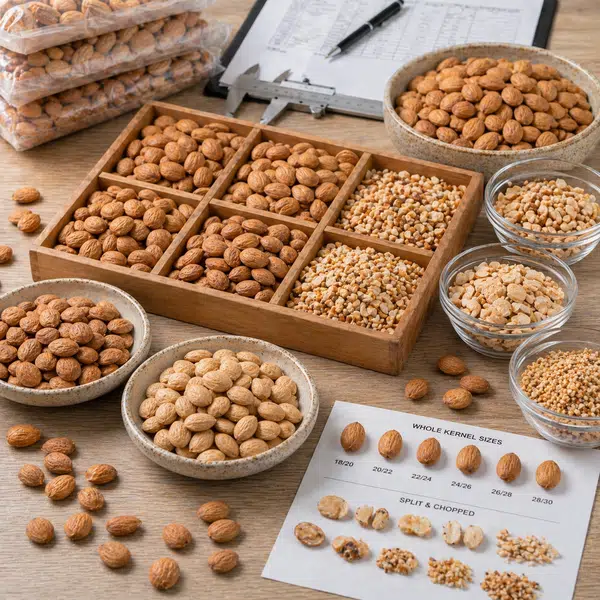
This article helps importers, processors, distributors and brand teams compare apricot kernel grades more clearly. It shows how size, visual quality and defect tolerances usually affect the suitability of the product for retail, food manufacturing and ingredient use before a program begins.
The first distinction: kernel type

Before grades and sizes are discussed, buyers should define the type of apricot kernel required. This is the foundation of the specification.

Sweet apricot kernels

Sweet kernels are typically discussed for direct ingredient use, certain snack applications, bakery, confectionery, mixes and broader food manufacturing use where the buyer wants a commercially practical edible kernel ingredient.

Bitter apricot kernels

Bitter kernels belong to a different commercial and application discussion. Buyers should define this explicitly from the outset rather than assuming both types are interchangeable within a general apricot kernel quote.

How grades are usually understood in practice

Apricot kernel grading is usually based on a combination of appearance, size style, breakage level and suitability for the intended application rather than one universal market rule.

Whole premium-style grades

These are usually more relevant for visible retail packs, premium snack formats, toppings or applications where intact kernel appearance matters commercially.

Commercial whole grades

These may still be suitable for many industrial and retail uses, but they are generally built around practical export quality rather than exceptionally selective visual presentation.

Industrial practical grades

These are often chosen where the kernels will be chopped, blended, ground or further processed. In such cases, absolute visual perfection may add unnecessary cost without improving actual performance.

Split or broken grades

Some applications can work efficiently with split material or controlled breakage profiles, especially where the product will not be sold as a premium whole-kernel item.

Cut or application-specific formats

Manufacturers may define their own preferred size or cut profile depending on whether the kernels are intended for bakery, confectionery, cereal blends, fillings or snack systems.

Retail versus industrial quality language

The same phrase can mean very different things depending on the sales channel. This is why serious programs usually need a written, application-linked specification rather than general verbal grade language alone.

What size means in apricot kernel trade

Size is not only a visual issue. It affects process behavior, pack presentation, inclusion balance and commercial suitability.

Whole-kernel size style: Buyers often describe whether they want a larger, more uniform appearance or whether a broader commercial size range is acceptable. In visible applications, this strongly influences perceived quality.

Size consistency: Even when exact dimensions are not defined numerically, relative consistency matters. More uniform lots generally perform better in retail presentation, coated applications, toppings and premium snack concepts.

Split and cut size logic: For bakery, confectionery and mix applications, the buyer may care less about whole-kernel size and more about how the material behaves when split, chopped or blended. In these programs, piece size distribution is often more relevant than whole-kernel appearance.

Application-led sizing: The best size profile depends on whether the kernels will be packed as a visible finished ingredient, used as a topping, blended into a mix, chopped for industrial use or processed further. The intended end use should always guide the size discussion.

Commercial implication: Tighter size control usually requires stronger selection and can influence cost. Buyers should therefore decide early whether the application genuinely needs a more selective size profile.

Main quality parameters buyers usually review

A practical apricot kernel specification usually includes more than type and size. These are the parameters that most often affect commercial approval.

Visual cleanliness

The kernels should be commercially clean and suitable for the intended channel, whether that means premium retail presentation or sound industrial ingredient use.

Breakage tolerance

Acceptable breakage level should be aligned with the application. Whole visible formats generally need tighter control than chopped or processed uses.

Defect tolerance

Buyers usually define what level of damaged, discolored or otherwise non-conforming kernels remains commercially acceptable within the agreed grade.

Uniformity

Uniformity supports cleaner retail presentation, better topping effect, more balanced blending and more predictable pack appearance.

Processing suitability

Industrial users often focus on how the kernels behave during cutting, roasting, grinding, blending or further ingredient preparation rather than on static visual appearance alone.

Packing compatibility

The quality grade should match the packaging model. A premium retail pack and a bulk industrial carton usually do not need the same visual standard.

Why one grade does not fit every application

The right quality profile depends on what the buyer is actually trying to do with the kernels.

Retail and snack use

These programs usually place more weight on whole-kernel appearance, visual consistency, low breakage and attractive pack presentation because the consumer sees the product directly.

Bakery and confectionery use

These applications often focus on how the kernels behave in toppings, inclusions, fillings, coatings or process systems. The correct grade may be more functional than visually premium.

Breakfast and snack mixes

In mix applications, buyers often care about distribution, compatible piece size, acceptable breakage and visual balance with other ingredients rather than a perfect whole-kernel retail look.

Grinding and ingredient processing

For further processing, the commercially best choice may be a fit-for-use industrial grade rather than a highly selective whole-kernel grade that adds cost without adding real value.

How buyers usually write better apricot kernel specifications

Clear specifications prevent most disputes and make quotations far more comparable.

Define the kernel type clearly: Sweet and bitter kernels should never be left ambiguous in a commercial inquiry.

State the intended use: Retail, snack, bakery, confectionery, breakfast mix, ingredient processing and private label programs may all need different grades even when the product family is the same.

Describe the size expectation: Buyers should clarify whether the priority is larger whole kernels, stronger size uniformity, split form, chopped form or a more practical commercial size range.

Set realistic breakage limits: This should reflect the actual application. Over-tightening the requirement can raise cost unnecessarily, while under-defining it can create receiving disputes.

Connect quality to packaging: The grade should match whether the product is destined for bulk export, industrial use, repacking or finished consumer sale.

Use a written approval basis: The best annual and repeat programs usually rely on a documented specification rather than on memory or broad descriptive phrases.

Typical mistakes buyers make with grades and sizes

Most sourcing problems come from unclear alignment rather than from complete lack of product quality.

Using broad terms without application detail

Phrases such as premium or export quality are too general unless they are linked to a real use case, breakage limit, size style and packaging model.

Paying for retail-grade appearance in industrial use

Some buyers over-specify visual perfection even when the kernels will be chopped, blended or ground, which can increase cost without improving performance.

Requesting industrial-grade material for visible finished use

Where the product will be consumer-visible, under-specifying the grade can weaken final presentation and customer acceptance.

Not separating kernel type from grade

Type and grade are different decisions. The first defines the product family, while the second defines the commercial quality profile within that family.

Failing to document breakage tolerance

Breakage is one of the most common sources of interpretation conflict, especially in whole-kernel programs.

Ignoring the link between size and process behavior

In industrial applications, size affects blending, cutting, coating, topping and pack distribution. It should not be treated as a cosmetic issue only.

Key takeaways

These points make the article immediately useful for importers, processors, distributors and quality teams.

Type comes before grade

Buyers should first define whether the requirement is for sweet or bitter apricot kernels before moving into grade and size discussions.

Grades should be application-led

The best grade is the one that fits the real end use, not automatically the one with the most selective visual presentation.

Size affects both appearance and process

Kernel size and size consistency influence pack presentation, blending balance, topping effect and industrial handling.

Breakage tolerance must be defined clearly

Whole-kernel, visible and premium programs generally need tighter breakage control than processed or industrial-use formats.

Written specifications improve repeatability

The strongest supply programs are usually built on written quality definitions rather than verbal assumptions.

Better specifications create better quotations

When buyers define type, size, grade and acceptable quality more clearly, suppliers can quote more accurately and with less commercial risk.

Commercial discussion checklist

A structured checklist helps buyers and suppliers move from a broad inquiry to a real apricot kernel specification.

Type brief

Confirm whether the requirement is for sweet or bitter apricot kernels and whether the program is conventional or organic.

Application brief

State whether the kernels are for retail, snack, bakery, confectionery, breakfast mixes, grinding or another industrial use.

Grade brief

Define whether the requirement is for premium whole-kernel presentation, a practical commercial whole grade, split format or an industrial-use profile.

Size brief

Clarify whether larger whole kernels, stronger uniformity, split style, chopped form or a broader commercial range is acceptable.

Quality brief

Set acceptable breakage, visual defect tolerance and any application-linked process expectations as early as possible.

Packing brief

Share whether the goods are for bulk export, repacking, industrial use or finished retail sale so the quality profile matches the actual route to market.

Mini FAQ

Short answers on apricot kernel grades, sizes and quality parameters.

What should buyers clarify first for apricot kernels?

Buyers should first clarify kernel type, end use, target market, desired grade, required certification profile, required size style and preferred pack format.

Why create a separate article for grades, sizes and quality parameters?

Because apricot kernel specifications are application-dependent. A visually stronger whole-kernel grade may be suitable for retail or topping use, while a more practical industrial grade may be better for grinding, fillings, confectionery or mix applications.

Can this topic support both organic and conventional programs?

In many cases yes, provided the kernel type, certification profile, processing flow and quality specification are aligned with the customer requirement and the available sourcing program.

Are apricot kernel grades standardized in exactly the same way for every buyer?

Not always. Trade practice often uses commercial grade language, but serious programs usually need a written specification covering kernel type, size style, breakage tolerance, visual quality and packing format.

Why do size and breakage matter so much?

Because size distribution and breakage level affect visual presentation, process behavior, blending consistency, packing efficiency and the final suitability of the kernels for the intended application.

Is the most selective grade always the best buying choice?

Not necessarily. The best buying choice is usually the grade that fits the real application. Over-specifying quality can increase cost without improving commercial performance where the kernels will be chopped, blended or further processed.

Quick Contact